Most car owners wash their vehicles regularly, but very few truly detail them. While washing removes visible dirt, detailing goes much further by cleaning, restoring, and protecting every part of your vehicle. It helps preserve the paint, improve interior hygiene, and maintain the car’s resale value over time. Auto detailing is generally defined as the thorough cleaning, restoration, and protection of both interior and exterior vehicle surfaces beyond a standard wash.
In Pakistan, detailing is especially important because vehicles are exposed to harsh conditions throughout the year. Dusty roads, air pollution, bird droppings, tree sap, hard water, and summer temperatures exceeding 40°C can gradually damage your car’s appearance. A vehicle parked outside in Lahore, Karachi, Islamabad, or Multan experiences significantly more environmental stress than one kept in a covered garage.
The good news is that you don’t need expensive equipment or professional training to start detailing your car at home. With a few basic tools and the right techniques, you can keep your vehicle looking cleaner, newer, and better protected.
In this beginner’s guide, you’ll learn everything you need to know about DIY car detailing, including essential tools, step-by-step procedures, common mistakes, and maintenance schedules.
What Is Car Detailing?
Car detailing is a comprehensive process that focuses on cleaning, restoring, and protecting a vehicle’s interior and exterior surfaces. Unlike a traditional car wash, detailing aims to improve both the appearance and condition of the vehicle.
A complete detailing session typically includes:
Deep exterior cleaning
Wheel and tire cleaning
Paint decontamination
Glass cleaning
Interior vacuuming
Dashboard and trim cleaning
Upholstery treatment
Paint protection
Car Detailing vs Car Washing
Many people confuse detailing with washing, but they serve different purposes.
Car Washing
Car Detailing
Removes surface dirt
Deep cleans and restores surfaces
Usually takes 20–30 minutes
Can take 2–6 hours
Focuses mainly on exterior
Covers both interior and exterior
Temporary cleanliness
Long-term protection
Basic maintenance
Complete vehicle care
Think of a regular car wash as brushing your teeth, while detailing is like a complete dental check-up and cleaning.
Benefits of Detailing Your Car at Home
Saves Money
Professional detailing services in Pakistan typically cost:
Basic detailing: Rs. 4,000–8,000
Full detailing: Rs. 8,000–20,000+
Ceramic coating packages: Rs. 25,000–150,000+
By investing Rs. 5,000–10,000 in quality detailing supplies, you can perform multiple detailing sessions at home throughout the year.
Protects Paint from Damage
Your car’s paint faces daily threats from:
UV rays
Dust particles
Bird droppings
Acid rain
Road contaminants
Hard water deposits
Regular detailing helps prevent oxidation, fading, and paint deterioration caused by environmental exposure. Protective products such as waxes and sealants create a barrier against UV rays, dirt, and contaminants.
Improves Resale Value
Vehicle appearance strongly influences buyer perception. A well-maintained vehicle generally attracts more buyers and can command a higher resale value because it signals responsible ownership. Regular detailing helps preserve both exterior and interior condition, which positively impacts resale value.
For example, two identical Toyota Corollas of the same model year may have significantly different resale values if one has faded paint, stained seats, and scratched trim while the other has been consistently maintained.
Creates a Healthier Cabin
A vehicle’s interior can accumulate:
Dust
Allergens
Food particles
Bacteria
Mold spores
Deep interior cleaning improves air quality and creates a healthier driving environment, particularly for families and individuals with allergies.
Essential Car Detailing Tools for Beginners
The good news is that you don’t need professional-grade equipment to get started.
These tools improve results but are not essential for beginners.
Preparing Your Car for Detailing
Choose the Right Location
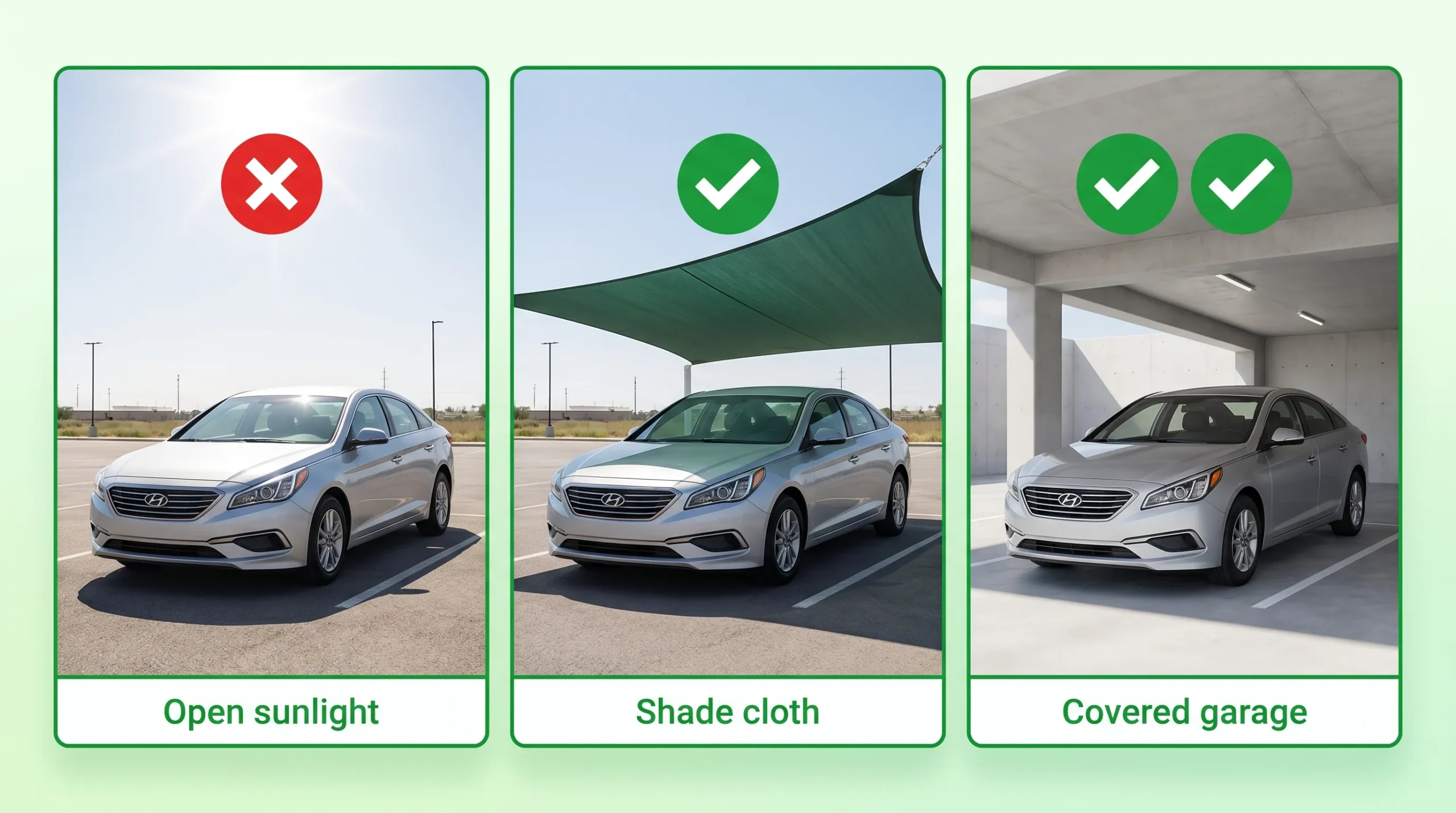
One of the biggest mistakes beginners make is washing a car in direct sunlight.
When water and soap dry too quickly, they leave behind mineral deposits and water spots that become difficult to remove later. Washing in a shaded area helps prevent streaks and spotting.
Ideal conditions include:
Early morning
Late afternoon
Covered garage
Shaded parking area
Inspect the Vehicle
Before starting, walk around the car and identify:
Water spots
Paint scratches
Bird droppings
Tar contamination
Interior stains
This inspection helps prioritize areas that need extra attention.
Gather All Supplies
A typical beginner detailing session takes 2–4 hours. Having everything ready beforehand makes the process more efficient.
Step-by-Step Exterior Car Detailing Process
Step 1 – Clean Wheels and Tires First
Wheels are usually the dirtiest part of any vehicle.
Brake dust, road grime, and grease accumulate rapidly and can splash onto freshly cleaned paint if cleaned later.
Use a dedicated wheel brush to scrub:
Alloy wheels
Wheel wells
Tire sidewalls
This step alone can dramatically improve your car’s appearance.
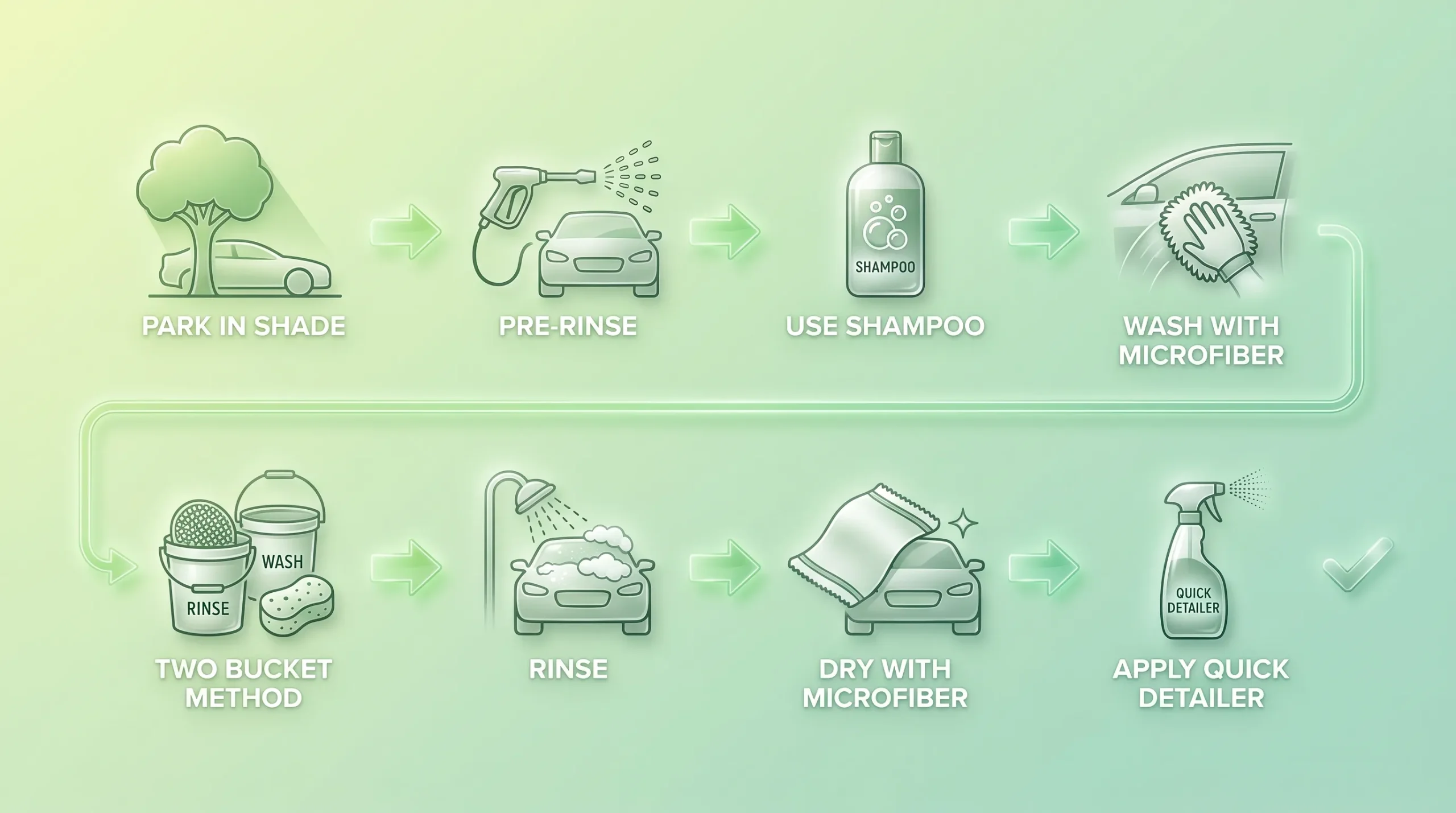
Step 2 – Pre-Rinse the Vehicle
Thoroughly rinse the vehicle before touching the paint.
This removes loose dust and grit that could otherwise scratch the paint during washing.
In Pakistani cities where dust accumulation is common, pre-rinsing is particularly important.
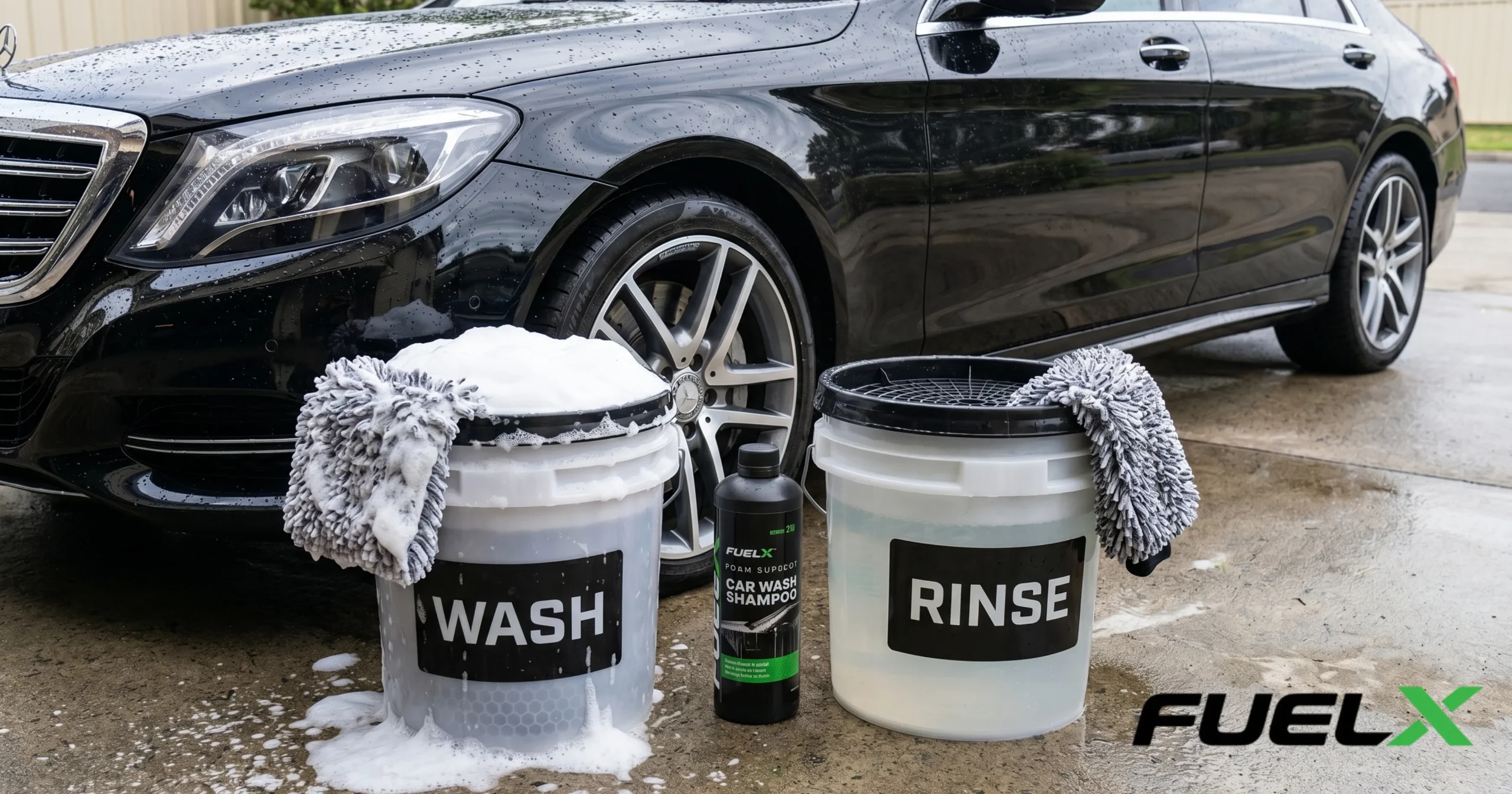
Step 3 – Wash Using the Two-Bucket Method
The two-bucket method is widely recommended because it reduces the risk of swirl marks and paint scratches.
How it works:
Bucket 1:
Car shampoo solution
Bucket 2:
Clean rinse water
After washing each section, rinse your wash mitt in Bucket 2 before dipping it back into the shampoo bucket.
This prevents dirt from being transferred back onto the paint.
Always wash:
Roof
Windows
Hood
Doors
Lower panels
The bottom sections of the car are usually the dirtiest.
Step 4 – Dry the Vehicle Properly
Many car owners skip this step and allow water to air dry.
Unfortunately, Pakistan’s hard water often leaves behind mineral deposits that create stubborn water spots.
Use a large microfiber drying towel and gently blot or drag it across the surface.
Never use old bath towels because they can create fine scratches.
This is where detailing differs most from ordinary washing.
Paint protection products create a barrier that helps defend against:
UV rays
Dirt
Water spots
Bird droppings
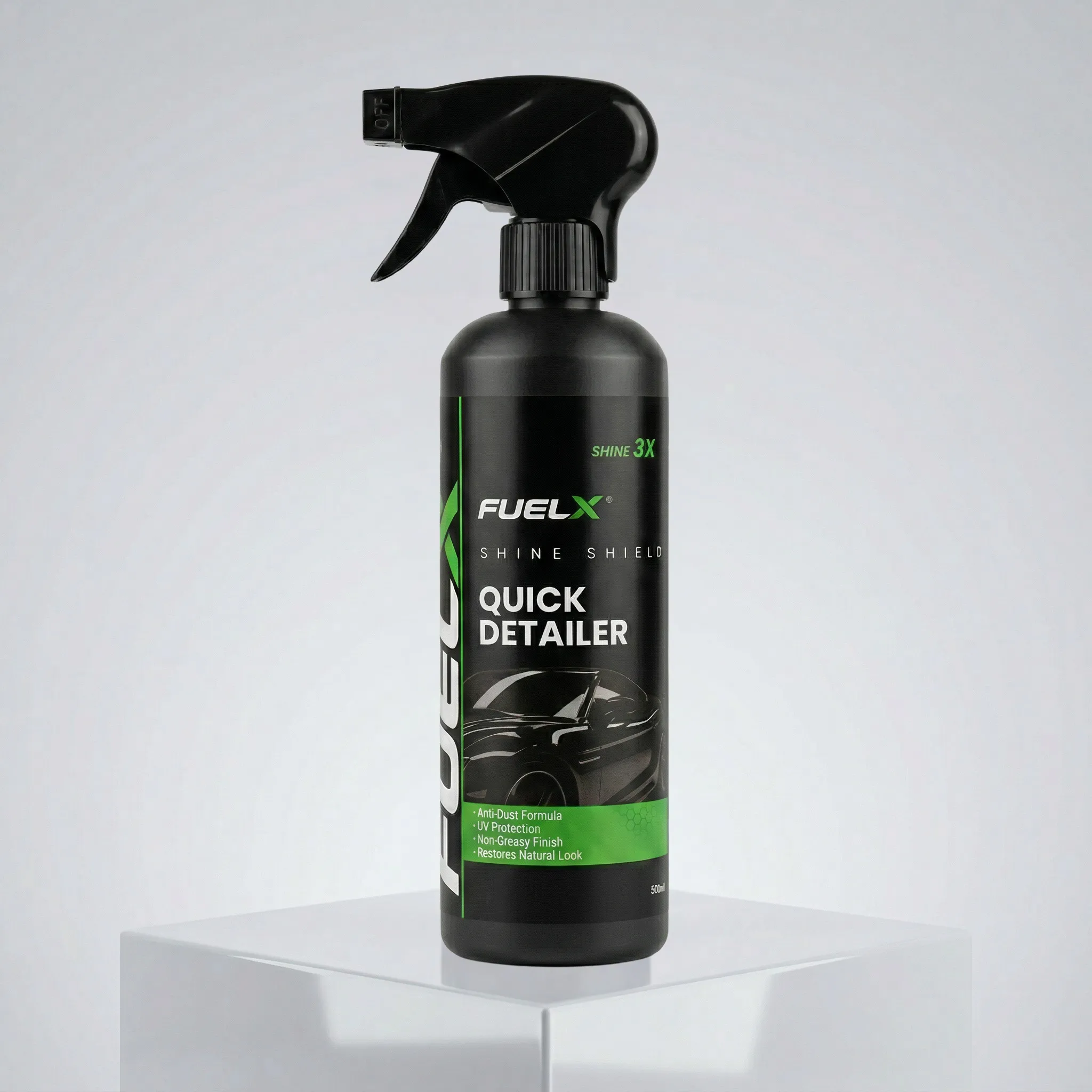
Even a simple spray wax can provide several weeks of protection and make future washes easier. Protective treatments help preserve paint condition and reduce environmental damage.
Step-by-Step Interior Car Detailing Process
Step 1 – Remove Trash and Loose Items
Clear out:
Bottles
Receipts
Shopping bags
Personal belongings
This provides easier access for cleaning.
Step 2 – Vacuum Thoroughly
Spend extra time vacuuming:
Floor mats
Seat rails
Under seats
Trunk area
Most interior dirt accumulates in these hidden areas.
Step 3 – Clean Dashboard and Door Panels
The dashboard receives constant exposure to sunlight.
Without protection, plastics can fade, crack, and lose their original appearance.
Use an interior cleaner and microfiber cloth to safely clean surfaces.
Step 4 – Clean Air Vents and Crevices
Air vents trap surprising amounts of dust.
A soft detailing brush helps remove dirt without damaging delicate components.
Step 5 – Clean Interior Glass
Interior glass often develops a film from dust, fingerprints, and air-conditioning residue.
Cleaning both sides of the glass improves visibility dramatically.
Step 6 – Protect Interior Surfaces
Apply a UV-protective interior dressing to:
Dashboard
Door panels
Plastic trim
Pakistan’s intense sunlight can accelerate fading and cracking. UV protection helps preserve interior materials over time.
Common Beginner Mistakes to Avoid
Washing in Direct Sunlight
Leads to water spots and soap residue.
Using Dish Soap
Dishwashing liquids are designed to remove grease and can strip protective wax layers from automotive paint. Professional detailers generally recommend using dedicated automotive shampoos instead.
Using One Bucket
A single bucket allows dirt to circulate throughout the wash process, increasing the risk of scratches.
Reusing Dirty Towels
Always use clean microfiber towels.
A dirty towel can undo hours of work by introducing scratches.
Applying Too Much Product
Using excessive amounts of wax or dressing wastes product and may leave streaks.
Ignoring Interior Maintenance
A spotless exterior combined with a dirty interior creates an incomplete detailing job.
How Often Should You Detail Your Car?
A practical schedule for most Pakistani drivers is:
Every Week
Exterior wash
Every Month
Interior deep cleaning
Tire treatment
Glass cleaning
Every 3 Months
Wax or sealant application
Every 6 Months
Complete detailing session
Every 12 Months
Paint inspection and correction if needed
Vehicles driven on dusty roads or parked outdoors may require more frequent maintenance.
DIY Car Detailing vs Professional Detailing
Factor
DIY Detailing
Professional Detailing
Cost
Lower
Higher
Time
2–6 Hours
2–8 Hours
Equipment
Basic
Advanced
Skill Level
Beginner
Professional
Convenience
Flexible
Appointment Required
For most car owners, DIY detailing is more than sufficient for maintaining a clean and protected vehicle.
Conclusion
Car detailing at home is one of the most cost-effective ways to protect your vehicle and maintain its appearance. While many people view detailing as a luxury, it is actually a form of preventive maintenance that helps preserve paint quality, improve cabin cleanliness, and support long-term resale value.
For Pakistani car owners dealing with intense heat, dust, pollution, and challenging road conditions, regular detailing is not just about making a car look good—it is about protecting an investment. By spending a few hours each month and following proper detailing techniques, you can keep your vehicle looking newer, cleaner, and better protected for years to come.
FAQ’s
How long does it take to detail a car at home?
Most beginners need 3–5 hours for a complete interior and exterior detailing session.
Can I detail my car without a pressure washer?
Yes. A standard garden hose and quality wash mitt are sufficient.
Is foam washing necessary?
No. Foam washing is helpful but not required for effective detailing.
What is the two-bucket wash method?
It uses separate buckets for shampoo and rinsing to reduce the chance of scratching the paint.
How much does DIY car detailing cost in Pakistan?
A beginner can start with approximately Rs. 5,000–10,000 worth of supplies.
How often should I apply wax?
Every 2–3 months for most spray waxes and every 4–6 months for longer-lasting sealants.